Paid Media
Performance Marketing Strategies for E-Commerce: A Practical Framework
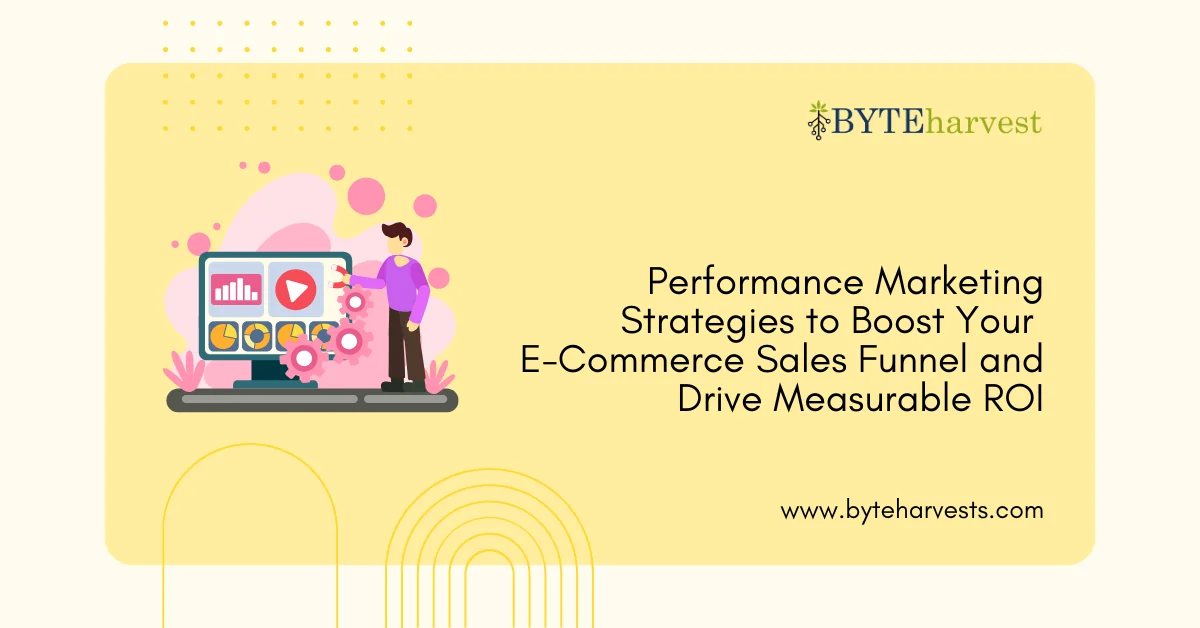
Too many e-commerce businesses run ads, post on social, maybe bring in an agency, and still can’t say what any of it actually returned. Performance marketing is the alternative: you pay for measurable outcomes — a click, a lead, a sale — not a promise about brand awareness.
That accountability changes how the whole marketing mix should work. Every channel becomes trackable, which means every channel becomes optimisable — and the ones that aren’t earning their spend become obvious fast. This is a practical framework across PPC, SEO, content, email, social and affiliate, and how to run them as one coordinated system rather than competing budgets.
What performance marketing actually changes
Traditional marketing is a billboard — you pay upfront and hope. Performance marketing is a salesperson on commission — you pay when something measurable happens: a click, a signup, a completed purchase. Every rupee spent is traceable to an outcome, and a campaign that isn’t converting can be killed before it drains the budget, rather than discovered in a quarterly review.
Tools like Google Analytics make the full path visible — which channel brought the customer, what they engaged with, whether they bought. That visibility is what makes performance marketing accountable in a way brand-awareness spend rarely is: your team or your agency has to show real outcomes, not impressions.
Fix the funnel before you scale traffic
A sales funnel leaking customers at every stage will waste traffic no matter how well-targeted it is. At the top, SEO, content and social advertising bring people in while they’re still comparing options — the job here is to be genuinely useful, not to hard-sell. In the middle, email and retargeting nurture people who know they have a problem and are evaluating solutions. At the bottom, everything needs to be frictionless: clear product benefits, an easy checkout, and trust signals like reviews — any hesitation here is where conversions die.
The fix is constant, specific diagnosis: which page is losing people, is it the product page or the checkout, are shipping costs the actual objection. Optimising each stage against what the data actually shows — not a general best-practices checklist — is what moves conversion rate and lowers acquisition cost together.
PPC for speed, SEO for durability
PPC is the fastest lever — an ad against real buying-intent keywords puts you in front of someone actively searching, with same-day feedback on whether the creative, offer and landing page are working together. It needs constant attention, not a set-and-forget budget, and whatever the ad promises, the landing page has to actually deliver — a mismatch there kills a campaign faster than weak targeting does.
SEO is the slower, durable counterpart. Product pages need real keyword-aware titles and descriptions; the technical foundation — crawlability, mobile performance, site speed — has to be sound or none of that content gets seen at all. It typically takes three to six months to show real traction, but organic traffic built this way keeps compounding without an ongoing cost per click — which is what eventually lets a business scale without being entirely dependent on ad spend.
Content and email: the channels most businesses under-invest in
Content marketing done well serves every stage of the funnel — comprehensive guides and comparisons for people still deciding, case studies and detailed specs for people close to buying. Done badly, it’s random posts with no connection to what the business actually sells. The difference is intentionality: content built against a real question, tracked against what it actually contributes to conversions, not published to hit a calendar.
Email consistently has the highest ROI of any channel, and it’s the one most e-commerce businesses treat as an afterthought. Acquiring a new customer costs several times more than selling to an existing one, so a neglected list is expensive in a way that doesn’t show up as a line item. Welcome sequences, abandoned-cart recovery, post-purchase follow-ups and genuinely segmented promotions — built around what a specific customer actually bought, not a blanket blast — are what separate a list that converts from one that gets ignored.
Social and affiliate: precision and pure performance
Social platforms offer targeting precision traditional marketing never had — demographics, interests, behaviour, even competitor followers. The visual format suits product discovery well, and user-generated content in particular performs because it’s authentic proof, not a brand claim. The discipline is picking the one or two platforms an audience actually uses and going deep there, tracked against cost per acquisition and return on ad spend — not likes.
Affiliate marketing is the purest version of pay-for-performance: no sale, no payment. The leverage is borrowed trust — an established creator’s audience listens to a recommendation in a way they’d never respond to a cold ad. A small number of well-matched affiliates with engaged audiences consistently outperforms a large number of low-relevance ones; the work is being selective about partners, not maximising headcount.
Coordinating the channels, not running them in silos
None of this works as isolated channel optimisation. Profitable growth needs coordination between acquisition, merchandising, conversion, retention and margin — a campaign that hits its target cost-per-click can still be unprofitable if the product economics or the checkout experience behind it are broken. Segment campaigns by customer intent and product economics, not just by platform. Improve product pages and checkout alongside the advertising that drives traffic to them. Use first-party customer data — not platform-reported metrics alone — to guide what gets scaled and what gets cut.
For an Indian e-commerce business specifically, this coordination matters more than the channel mix itself. Cash-on-delivery return rates, regional payment preferences, and delivery-radius realities all affect the real economics behind a “successful” ad campaign in ways a generic international playbook won’t account for.
Bringing in specialised help
Building every one of these capabilities in-house — PPC management, SEO, funnel optimisation, analytics — is expensive and slow to get right through trial and error. The right agency brings tested approaches and specialists who’ve already solved these problems elsewhere. The wrong one takes the budget and delivers activity without accountability.
Look for a partner who specialises in e-commerce specifically, can show real case studies with real numbers, and is transparent about reporting rather than running a generic playbook. The relationship should feel collaborative — genuinely aligned with the business’s goals, not a vendor executing a fixed scope regardless of what the data says.
Measurement is the whole point
Comprehensive tracking — which channels bring customers, what each one costs, how touchpoints interact — is what makes any of this accountable rather than a collection of separate bets. UTM parameters, conversion tracking, and a real analytics and reporting setup are the unglamorous infrastructure underneath everything else here.
A/B testing should run continuously — creative, landing pages, subject lines, pricing — one variable at a time, documented, so the business actually learns what works for its specific audience rather than repeating industry-average advice. And ROI should be calculated per channel, per campaign, not as a single blended number: some channels look expensive but bring high-value repeat customers, others look cheap and bring one-time buyers who never return. That distinction is what performance marketing is supposed to reveal.
The takeaways
- Pay for outcomes, not exposure — performance marketing means clicks, leads and sales, not brand-awareness promises with no attribution.
- Fix the funnel before scaling traffic — broken checkout or weak product pages waste every rupee spent driving people to them.
- PPC and SEO play different roles — PPC for speed and immediate feedback, SEO for durable, compounding traffic that doesn’t depend on ongoing spend.
- Email is still the highest-ROI channel — and the one most businesses under-invest in relative to what it returns.
- Coordinate channels, don’t silo them — acquisition, merchandising, conversion and retention need to move together, not compete for separate budgets.
- Indian e-commerce economics are specific — COD return rates, regional payment behaviour and delivery radius change what “profitable” actually means here.
- Measure per channel, not blended — a single ROI number hides which channels are actually earning their spend.
None of this is a shortcut to overnight growth. It’s a framework for making marketing spend accountable — paying for real outcomes, coordinating channels instead of running them in silos, and letting the data decide what gets more budget and what gets cut.
Want help putting this into practice?
This is everyday work for our Google Ads team, working with businesses across Bengaluru. Book a free 30-minute consultation — no pitch, just an honest view of what would move the needle for you.
Book a Free Consultation →